Headings

Food (537) History (433) Travel (259) art (233) maritimes (182) Spain (165) France (138) Vancouver Island (136) UK (96) Portugal (81) Postcard of the Interwebs (70) Musings (50) Tofino (47) Scandinavia (44) book (43) Italy (39) Hornby (31) Movie and TV (27) Music (24) Conventions (23) Wisdom without Zealotry (17) Quadra Island (12) San Francisco (11) Newfoundland (7) Ottawa (5)

Saturday, 21 October 2023

Reflections on our Trip to Spain and Favorites

Looking back on our trip to Spain, there was a lot that my wife and I enjoyed. It also felt extremely good to be travelling overseas again, exploring a new country and new culture: language, history, food, and art. As human beings we should not take for granted the ability to travel and connect with other humans. By doing so we become better people, benefiting from the experience. 

Making an effort to be a good guest in someone's country starts with the ability to give and receive information and an awareness of their culture. You learn with that knowledge and mutually gain more from the people living it every day. Therefore we downloaded Duolingo on our phones to learn basic Spanish and although we should have been doing so well in advance of our trip, the couple of months doing so really helped. It made the trip more enjoyable. We also took advantage of the Rick Steves guide and podcasts to be more aware of the ins and outs of Spanish way of life.

Spain has so much diverse history that cannot be lumped into one sentence. The life of the prehistoric Tartessos, Greek, Carthaginian, Roman, Germanic tribes, Islamic, and Christian eras have formed the diverse Spaniards today. Each age has added to its culture and makes it unique through this blending. It is obvious that Spain is a country of regions with its regional aspirations as well as national pride. It was fantastic to see and experience this history in its current day to day life and its past.

The culture of the various areas of Spain are also revealed in its wonderful food. Its not just the jamon (cured ham), paella, vermouth, wines and other dishes. It is the things you find on a menu in small and slightly out of the way places. The ones that have been there a while or are newly opened by a maverick owner of chef. The ones that have local or reimagined local foods that may sound odd but are something that you have never had and may never have again. Spain, and other countries we have been to has that in each of the cities we stayed in, as long as we stayed off the touristy touted places. It was a joy to experience.

The art that was seen, from all the eras and styles, was marvelous to experience. I have discovered over the years, starting with my first trip to Europe in 2003, that I like art. Not just any art but the art that moves me and stand in frount of. To glimpse at the work captured in paint, clay, marble, bronze, wood, or other mediums has let me see a fraction of the emotion of what it took to create. In many museums I often see folks, as tours or in their own group, move to only the select big name items without letting them have a chance to let each of the visitors find the art that move them. It also made me realize that there is more to art than the masterpieces. The ones that in their year of creation may have been derided, dismissed, and mocked. Art that makes you feel something, and even better when it is a profound something, does not have to be exclusive to what self proclaimed critics feel is proper art. More often than not it is, but let yourself be surprised. Wander in the renown museums, galleries, and small towns with local works because you can find your own masterpiece for yourself. 

Overall we had a whirlwind trip, staying in five cities over 24 days of travel. We walked a total of 217.5 km and went up/down 442 flights of stairs, averaging 9 km and 18 flights a day. Although we do not regret what we saw, it would be nice to slow things down next time and not feel compelled to see all the highlights, regardless of how tempting it is. It would be especially nice to get places with a kitchen to take advantage of the markets and try to make some of our own locally inspired meals.

Speaking of highlights, here are the things that I particularly enjoyed, that embraced one or more of the aspects of language, history, food, and art: 

Madrid
Thyssen (1, 2 & 3)
MAN (Part 1, 2, 3, and 4)

Sevilla
Countess of Lebrija's Palace (1&2) and Alcazar (12 & 3)
Barrio de Santa Cruz  at night and day

Granada
Alhambra (1234567891011)
Albaisin Walk (updown)

Barcelona
Gaudi Buildings: Sagrada Familia history, Outside (entrance, apse, passion 1&2, glory, nativity, and high up) and Inside (centergeneral, passion, glory, nativity, apse, museum), Guell Palace (main and downstairs, first floor, rest of first floor and second, rooftop, , La Pedera (ground, rooftop, apartments)
MNAC (National Catalan Museum): Building, Romanesque, Gothic, Renaissance, Modern
Maitea (1, 2, & 3) and Gresca

Montserrat
Museum (AncientGothic and Renaissance, Modern 1&2)

Toledo
Walking Around: 123, and 4 and the Tourist Train for the view of Toledo
Religious Processions (1 & 2): 
El Trebol (1 & 2)

One final note, my wife and I each purchased a ScotteVest RFID Travel model for this trip an I also tried it out for an emergency trip across Canada. I am glad I spent the money on it. 


It carries so much in its pockets: six large inside, four large outside, and one very large lower back and 15 other little sub-pockets for pens or tiny items. It feels lighter once worn because of the distribution of weight. Well worth the money spent for the purchase. We got it at the Adventure Clothing store downtown Victoria.

Tuesday, 15 August 2023

Spain Day 21e - Streets of Madrid

These are the pictures taken on our last full day in Spain. Enjoy.


Spain Day 21d - MAN Part 3 - Byzantine and Islamic Sections

Here we started to rush as on the Thursday before Good Friday, public buildings close earlier in the afternoon.

Objects from the the Guarrazar hoard, from between 621 and 672 CE.


Votive crowns from the Torredonjimeno hoard.


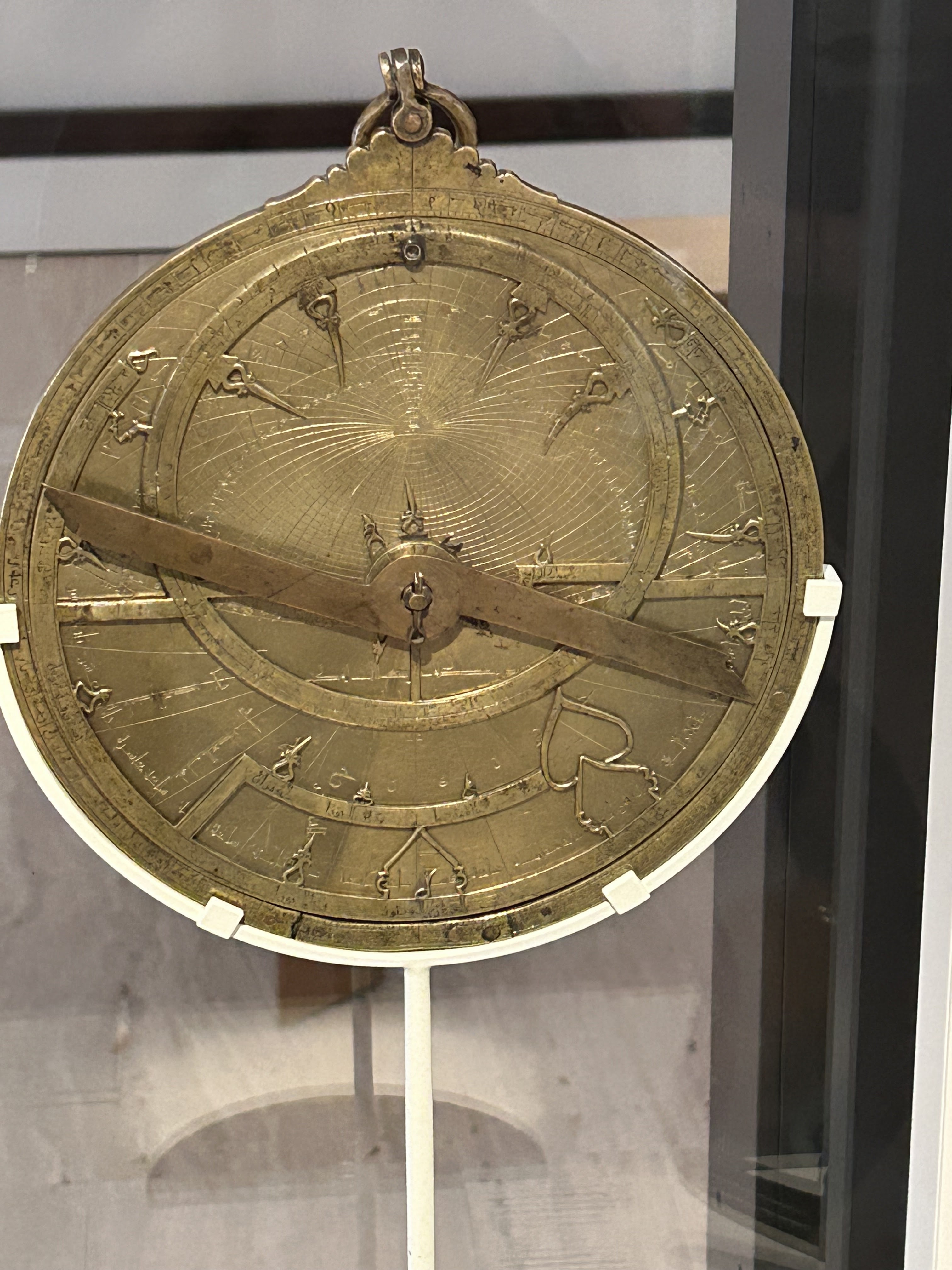
Astrolabe made in Toledo by Ibrahim ibn Said al-Shali in 1067.


15th Century brazier.


Tabernacle door from the cathedral of Jaen.


Ornate wooden ceiling.


An ornate wooden dome.


Spain Day 21c - MAN Part 3 - Roman Iberia

There are many unique items in the MAN that I have not seen elsewhere and/or were distinctive in their quality.

3rd Century mosaic of a gladiator fight.


Another incredible mosaic.


Huge room with huge mosaics.


Mosaic of the Genius of the Year, a deity that produced and preserved everything that lived and evolved. 


Roman law on a bronze plate, for display on government buildings. From 81-96 AD.


A bronze water pump for mining from the 1st century.


A late 2nd - early 3rd century standard of a civic collage.


A bronze centaur lamp from 1st to 2nd century.


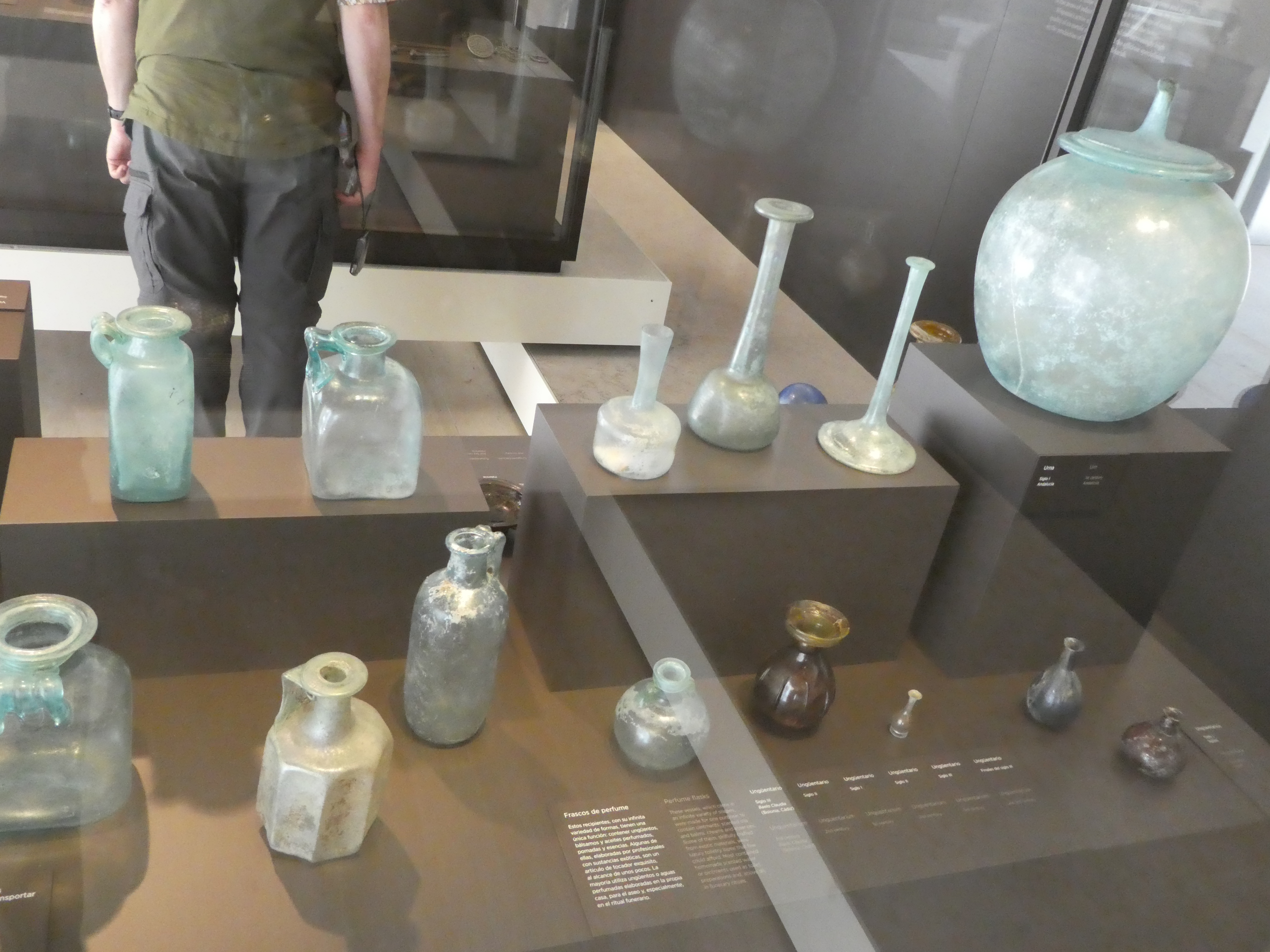
Glass objects.


Semi-precious stones.


A broach of ivory, gold, and semi-precious stones.


Wednesday, 2 August 2023

Spain Day 21b - MAN Part 2 - Bronze and Greek eras

The Bronze age in Iberia was from 2200 to 1300 BCE. Cultural diversity begins to be more apparent and easier to identify for modern archeologists. It is also the time where differences in economic status become more pronounced.

Pots from cultures of the Bronze age. An example of walled towns are depicted behind them.


Gold plaques make up this belt showing the god-hero Melqart fighting creatures real and imagined.


Using sheet silver a patera for drinking was made. Wolfs eating a human head while serpents surround both have been uncovered in the Iberian peninsula. What makes this item unique is the Hellenistic centaurs at a banquet holding instruments. This is most likely because of the interaction between Iberians and the Phoenician and Greek trading ports and colonies here.


Indicating the prominence of women in early Iberian cultures, the Lady of Baza statue has symbols of divinity and that of a spiritual intermediary.


The Lady of Elche has similar symbols as the Lady of Baza.


Pendants of heads made in the 4th to 3rd centuries BCE. They look interesting but odd and I would love to know more about them.


There was a culture on the Canary islands before taken over by the Spanish made up from ancestors of the Berbers. It is postulated that the Phoenicians, Greeks, and Carthaginians most likely visited there. King Juba the second is credited as being the first to claim and record its discovery and various European sailors made small colonies here. The Castilian Spanish in 1402 made a full invasion and brutalized the population here which lasted for over a century and led to enslavement for its indigenous population for growing and harvesting sugar. The mummified remains below was found in a cave in 1764 and is from the 12th to 13th centuries.


From the late bronze age, this gold bowl or hat is from the Tumulus or Urnfield cultures. There are solar symbols on it, probably for religious events.


A Greek urn from the workshops in the Colony ports in Iberia.


A diadem from the third century BCE, found in the La Puebla de los Infantes horde.

Spain Day 21a - MAN Part 1 - Background and Prehistory Section

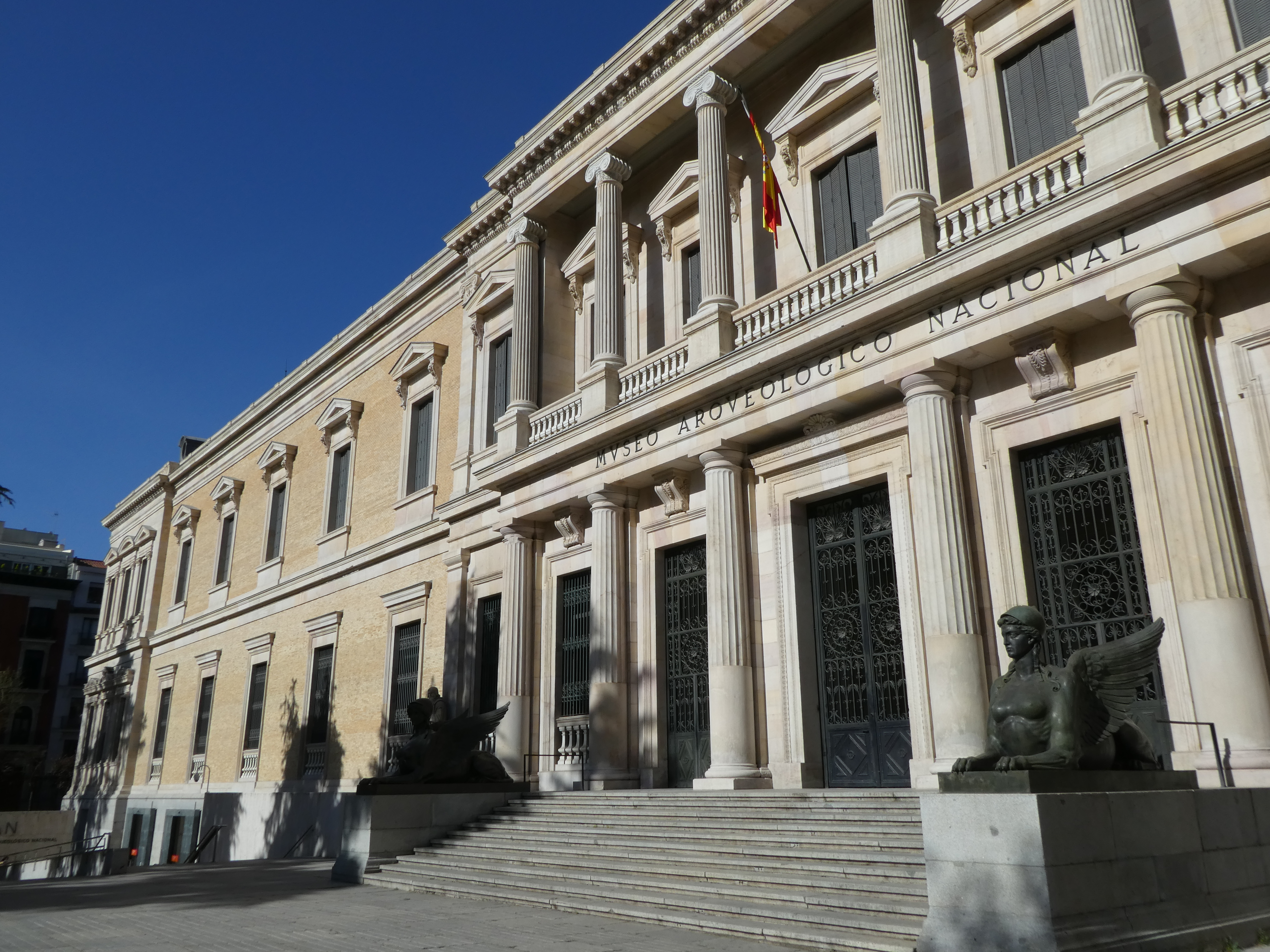
The MAN, or Museo Arqueologico Nacional (National Archeological Museum), was founded in 1867 by Isabella the second. It started with the royal collection of historical items. Its current location was finish in 1892 as a purpose built location for the museum. 

The sphinx, keeper of knowledge.


Statue of Diego Velazquez, famous Spanish painter.


Replica of the cave of Altamira.


The lobby has a great introduction to the world of history, culture, and people of the world.


It also includes a video timeline of the Earth and its history. The was an excellent display video, on a map of Spain, showing the different cultures that existed in the Iberian peninsula. It was an excellent visual primer on what the museum has to offer. 


The pre-history section of the MAN is by far one of the largest and best presented of any I have seen. I was very impressed by not only the items on display but also being blunt about what is conjecture and what is fact.


Found in the cave of Los Murcielagos are textiles from the Neolithic and Chalcolithic eras, made with esparto grass. Spain has many caves that have preserved remains and items from pre-history> The Iberian peninsula is the region with the best as well as most preserved finds of Europe.


Baskets and sandals also made from esparto grass.


Cut from schist or slate, these plaque idols from Cespedes farm are found throughout the Southwestern Iberian peninsula. Even though they look alike none have been identical. 


Throughout this section there are handy maps showing where items have been found, based n the topic of that sub-section.


A plaquette decorated with an equid, found in Castillo cave and part of the Magdalenian culture.